February 2012

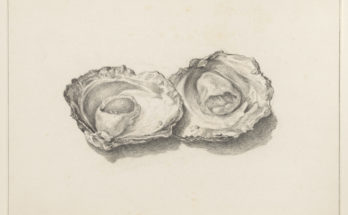
Oysters were popular in the 1800s. What happened? According to The Independent in the UK, oysters were popular in the 1860s because they were affordable, and bulked up expensive dishes, such as meat pies. By the late 1800s oysters were more expensive and popular. Meat was now the ingredient bulking oyster pies. People consumed oysters that should have been used to re-seed oysters beds, and during war, oyster-beds were neglected. Here is an oyster cookbook from 1913 on facebook claiming that oysters weren’t as expensive as they seemed.

Because they take on the taste of the water whence they’ve come, oysters are the perfect vehicle for reflecting the ocean quality. Drew Smith wrote a guide to tastes of oysters from different locations in Europe, located at the end of The Independent‘s informative oyster article. And a quick google search pulls up a company who ships fresh oysters overnight.

3 helpful videos to watch before ordering your fresh oysters:

oyster cookbook.

Valentine Wish

by Rena

Valentine Day cooking.

When I think of the pies and
the puddings you make,
And all of the hundreds of steps
that you take,
With hands ever skillful
no pains do you spare
To make all those happy who
chance to be there
May your life be quite rosy
and read like a book
And give as much pleasure
as the good things you cook.
– anonymous

Kerosene Lamps

by Rena

All about your oil lamps — Part I of III; memorable videos.

Dr Miles Candy Book, circa 1911.Dr Mile’s Candy Cook Book was published circa 1911, no later than 1914. It has recipes for Salted Almonds, Candy Eggs for Easter, Cocoanut Taffy, Popcorn Balls, Cough Candy, Coffee Fudge, Popcorn Fudge, Maple Wax (made with snow or ice), Rose Drops and Jujube Paste (both recipes call for cochineal to color), and more. Much of the text is a call to try Dr Mile’s medicines.

Dr Franklin Miles was born in 1845 and graduated from Rush Medical College in 1874, and Chicago Medical College in 1875. He practiced medicine for ten years and in c. 1885 established the “Miles Medical Company” in Elkhart, Indiana to make and distribute his patent medicines.

Emma Wilson's cooking class, c. 1907.

Born five years before the Civil War as the daughter of an enslaved cook, little Emma Wilson wanted to go to school with her white friends. She was told she couldn’t because of her race, and after the Civil War she was told she couldn’t because she was a girl. Through her determination, she kept pace with the class outside of school. When the time finally came that she could attend school, she was placed within her grade.

Emma Wilson, c. 1900.

Emma Wilson, founder and principal of the Maysville Industrial and Educational Institute

Wilson’s commitment to education and her great desire to assist others of her locale and race made her change her plans from ministering in Africa to building a local school in her hometown of Maysville, South Carolina. The school began in the kitchen of her mother’s cabin in 1885. It quickly grew and was incorporated as the Maysville Industrial and Educational Institute. After a few years Wilson became committed to teaching not only liberal arts, but also skills such as blacksmithing, sewing, and cooking.

The first cookbook known to be authored by an African-American woman is the 1866 book, A Domestic Cook Book: Containing a Careful Selection of Useful Receipts for the Kitchen by Malinda Russell.

Select the History Cookbook tab on Cookit! for quick educational references. Enjoy food facts and cooking videos from different time periods including:

Skip the introduction to 4:00 minutes into the video, and listen to the enjoyable lecture by Dr Megan Elias about the history of lunch.


American Cookery article from 1920–

“If some fine day, all housewives awoke to the fact that most of the trouble in the world originates in the kitchen, there would shortly be a little more interest in kitchen problems and not so much distaste for and neglect of this important part of the house.

“Of course, women will cry out that we have never in our lives been so intent on just that one subject, kitchens, as we are today.

“I admit that there is a good deal of talk going on which might lead one to believe that vacuum cleaners and electric-washing machines, etc., are to bring about the millennium for housekeepers; and there is also a good work going forward to make of housework a real profession.

“But, until in the average home there comes the feeling that the kitchen—the room itself—is just as much an expression of the family life and aims and ideals as the living room or any other room, we shall be only beating about the bush in our endeavor to find a remedy for some of our perplexing troubles.

“Nowadays, women who are doing much work out in the big world—the so-called “enfranchised” women—are many of them proving that they find housework no detriment to their careers and some even admit that they enjoy it.

“But so far most of them have standardized their work and systematized it, with the mere idea of doing what they have to do “efficiently” and well, with the least expenditure of time and energy. And they have more than succeeded in proving the “drudgery” plea unfounded.

“Now, however, we need something more. We need to make housework attractive; in other words, to put charm in the kitchen.

“There is one very simple way of doing this, that is to make kitchens good to look at, and inviting as a place to stay and work.

“For the professional, scientifically inclined houseworker, the most beautiful kitchen may be the white porcelain one, with cold, snowy cleanliness suggesting sterilized utensils and carefully measured food calories.

“But to the woman whose cooking and dishwashing are just more or less pleasant incidents in a pleasant round of home and social duties, the kitchen must suggest another kind of beauty—not necessarily a beauty which harbors germs, nor makes the work less conveniently done, but a beauty of kindly associations with furniture and arrangements.

“Who could grow fond of a white-tiled floor or a porcelain sink as they exist in so many modern kitchens! And as for the bulgy and top-heavy cook stoves, badly proportioned refrigerators, and kitchen cabinets—well, we should have to like cooking very well indeed before we could feel any pleasure in the mere presence of these necessary but unnecessarily ugly accompaniments to our work.

We have come to think of cleanliness as not only next to godliness, but as something which takes the place of beauty—is beauty.

“This attitude is laziness on our part, for we need sacrifice nothing to utility and convenience, yet may still contrive our kitchen furniture so that it, also, pleases the senses. With a little conscientious reflection on the subject we may make kitchens which have all the charm of the old, combined with all the convenience of the new; and woman will have found a place to reconcile her old and new selves, the housewife and the suffragist, the mother-by-the-fireside and the participator in public affairs. The family will have found a new-old place of reunion—the kitchen!

“Granted then that our tiny house has a kitchen-with-charm, and an “other room,” the rest of the available space may be divided into the requisite number of bed and living rooms, according to the needs of the family.

“KITCHEN FOR THATCHED-STYLE COTTAGE
“There is only one other very important thing to look out for; that is the matter of closets. There is no rule for the number of closets which will make the tiny house livable, but I should say, the more the merrier. If there is ever question of sacrificing a small room and gaining a large closet, by all means do it, for absolute neatness is the saving grace of small quarters, and storage places are essential, if one does not wish to live in a vortex of yesterday’s and tomorrow’s affairs with no room to concentrate on the present.


“FIRST-FLOOR PLAN OF THATCHED COTTAGE
“Inside and outside the tiny house must conform to one law—elimination of non-essentials; and the person who has a clear idea of his individual needs and has also the strength of will to limit his needs to his circumstances, will find in his tiny house a satisfaction more than compensating for any sacrifices he may have made.”

Pray what do they do at the club?
Tis ever the question they ask; But to answer it fully, I fear, Were rather a serious task; And yet, if you’ll listen to me, And pardon my rhyming with “grub,” I’ll venture a bit of a song To tell what they do at the club.

Imprimis, I’ll tell you they cook.
Oh, thoughtful and careful the eyes
That study the recipe book.
With glances so eager and wise!
Or they listen, as if In a trance,
To lectures and hints and the rules
From their sisters, their cousins and aunts
Who have learned in experience schools.

Then they measure, they pound and they sift,
They bake and they stew and they fry;
They roast and they stir and they lift,
They mold and they shake and they try–
Till from cellars and pantries and fire,
From kitchens and ovens and shelves
Come dainties I’m sure you’d admire.
And say they were made by the elves.

With a flutter of fans and of lace,
They meet for their “six o’clock tea”
With a smile of content on each face
And appetites startling to see.
They have jellies that melt like a dream
And patties and salads and meat
And coffee and biscuit and cream
And pickles and “sweets for the sweet.”

Then the cooks all laughingly chat.
As the moments so merrily fly.
Not forgetting their duty and-—that
Is to taste every dish passing by.
And they talk upon frivolous fun,
Or on subjects as grave as the “Hub,”
And they eat and they eat and they eat
And that’s what they do at the club.

– from Cook book of the Young Ladies Cooking Club, Monroe, Michigan,