November 2009

Le Mars, Iowa is officially the “The Ice Cream Capital of the World.”

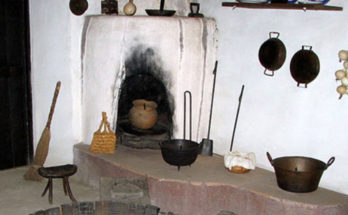
Visit the Amana Heritage Society’s 1863-1932 Communal Kitchen Museum in Iowa.

Conveniently, Iowa’s Hart Dummermuth House Museum staff posted a picture of their 1890s-1900s kitchen on their website : ) Berkeley Historical Museum in Bayville, New Jersey doesn’t have a picture, but there is a 1900 kitchen there, if you’re in the neighborhood.

Visit these historic grocery stores if you’re in the neighborhood:

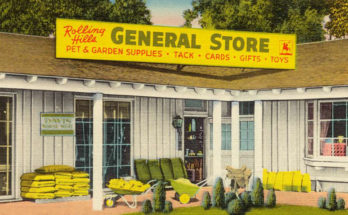
General Store Museums

What does this small Pioneer Kitchen building contain?

More museum kitchens…

Franklin County Historical Museum See the slide in the first column, last row.

Milk from cows? — it’s true! If you knew that, and want to know more about dairy farming, The Iowa Dairy Museum is a go-to source.

Want to see one early-1900s bottle of kethup? Why not! You can view the kethup bottle with correspondence between the company and a satisfied customer at the Seaford Museum in Seaford, Delaware.

Read the history of tomato ketchup.

Clabber Girl Museum in Terre Haute, Indiana

Candy Museum

by Rena

Schimpff’s Confectionery in Jeffersonville, Indiana (Southern Indiana) There is also a candy store at the location.

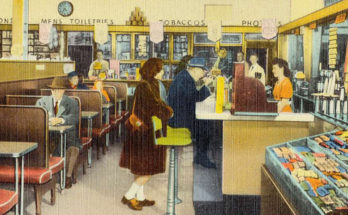
Soda Fountains

by Rena

Vintage Soda Fountains

…and there’s a collection of more than 500 old soda pop bottles at Norton’s Indian Territory Museum in Marietta, Oklahoma.

See link to Luncheonette and Soda Fountain Manual

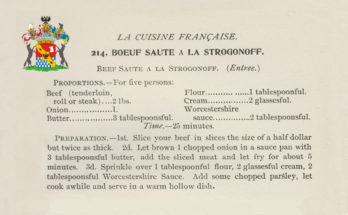
La Cuisine Francois by François Tanty Chicago: Baldwin, Ross & Co.

BEEF SAUTE A LA STROGONOFF. (Entree.)
PROPORTIONS.–For five persons:

Beef (tenderloin, roll or steak)….2 lbs.
Onion………………………….1.
Butter…………………………3 tablespoonsful.
Flour………………………….1 tablespoonful.
Cream………………………….2 glassesful.
Worcestershire sauce…………….2 tablespoonsful.

Time.–25 minutes.

PREPARATION.–1st. Slice your beef in slices the size of a half dollar but twice as thick. 2d. Let brown 1 chopped onion in a sauce pan with 3 tablespoonsful butter, add the sliced meat and let fry for about 5 minutes. 3d. Sprinkle over 1 tablespoonful flour, 2 glassesful cream, 2 tablespoonsful Worcestershire Sauce. Add some chopped parsley, let cook awhile and serve in a warm hollow dish.

A 200-Year-Old Tour of Gastronomic Paris
By Tony Perrottet Published: November 22, 2009
A food-obsessed traveler uses the Zagat guide of the Napoleonic era to explore the culinary wonders of this city in the 21st century.

On the Historic Trail of a Parisian Gourmand
Ed Alcock for The New York Times Published: 2009-11-22
A culinary guide to the City of Light through a 19th-century foodie

A 200-Year-Old Tour of Gastronomic Paris
Published: November 22, 2009
A Revolutionary-era gourmand financed his appetites by writing about them.

The Canadian government required those going to the Klondike gold fields to bring a year’s supply of food with them to avoid starvation during the long Yukon winter. Some of the recommended supplies included 400 pounds of flour, 200 pounds of bacon, and 100 pounds of beans! (1)

(1) Klondike Gold Rush National Historic Park

……………………………………………..

Baked Alaska

It was probably about the time of the Klondike Gold Rush when the dessert Baked Alaska was so named. The ingredients are:

  • Sponge Cake [invented 1700s - early 1800s] or other sweet base
  • Meringue [invented in the 1600s]
  • Ice Cream [invented in China 3000 BC ]

The recipe itself was earlier, probably from China, and introduced to the Parisians by the Chinese in the mid 1800s. The Paris cooks revised the recipe from a pastry casing to a meringue casing for ice cream, and that is how it was introduced to the United States. It was probably from Delmonico’s NY kitchen under Chef Charles Ranhofer that the recipe was adapted and renamed to honor the American rush to Alaska. [See The Big Apple article by for a well-reseached time-line with recipes from different times.]

Directions

Place on a board a thin layer of sponge cake cut an inch larger than your brick of ice cream [any size rectangular block] Place the very-hard frozen ice cream brick on the sponge cake and cover quickly with a meringue, spreading it thickly all over the ice cream, using a pastry tube for the finish. Place in a hot oven to brown the meringue, and then transfer to a serving plate.

Or you could use a pie shell or cookie as a base. For how-to videos on Baked Alaska and for a thourough reflection on the history please see The Big Apple article by Barry Popik.

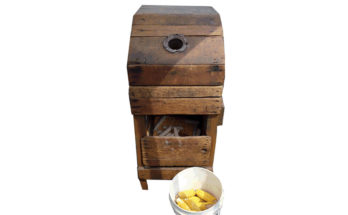
Corn Sheller – Wooden Case

Hand-crank is on the right side of the case…

The Historic Manning House in Tucson, Arizona serves a 1900 Victorian Evening Buffet, with period-dressed servers.

Early Mexican kitchen in the Avila Adobe, Los Angeles, California. Picture taken by Brenard Gagnon. Click picture for details.

Another early-1800s Mexican kitchen to visit is at the Hacienda de los Martinez Museum in Taos, New Mexico

Every Saturday
9:00 am–4:30 pm
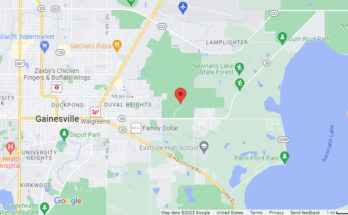
at the Living History Farm at
Morningside Nature Center

The Living History Farm comes to life with staff interpreting day-to-day life on a rural Florida farm. Sample biscuits, fresh butter and a slice of life from 1870! FREE.
Check their website to confirm information before travel.


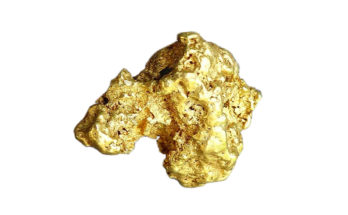
Gold Nugget Museum in California displays a living history kitchen from circa 1930–see their 2nd row-3rd column of photos.

Modern Cereal

by Rena

Some of the processed items it would be great to duplicate from scratch are:

  • blue corn taco chips
  • flour
  • corn flakes, or similar flaked cereals

The first two require a common household mill. But corn flakes? How do the cereal companies make flaked cereal? Flaked cereal has been around since milling machines have been around, and earlier when done by hand. But they make small flattened grains–oatmeal, for example. Here is a site that inspired me to try to obtain an Italian oat rolling mill or flaking machine by the name of Marcato. And the following photos are of an antique Roller Mill in the process of making flaked wheat from hulled wheat, similar to the household Marcato.

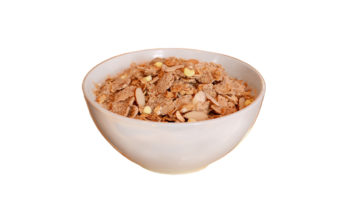
But what we’re looking to make at home are large crispy flakes, such as corn flakes. In 1894 Kellogg invented a recipe of boiled grain in paste form, which was then dried and roasted. In 1906 malt was added as a sweetener which began their commercial success with corn flakes.

Now all major cereal companies make an adaptation of the corn flake and we found one of the machine suppliers for making them:

Baker Perkins is one of the companies that manufacturers the machines that make corn flakes and extruded cereals.

A bakeryandsnacks.com article mentioned that the flaking process consists of converting “grains or extruded pellets” into flakes ready for toasting. And Baker Perkins mentions “wheat and bran flakes [use] the traditional steam cooking process…” and “Other units can be added later to extend the product range to include corn, multigrain and frosted flakes…and…extruded cereals such as corn balls, multigrain rings, alphabet shapes, and cocoa balls can be extended, through additional units ”

Sounds like fun! Let’s write to them and ask them to make a small version for the home kitchen! Or tell your inventor friends. : )

Baker Perkins cereal machine manufacturer: Follow-up

On September 6 [2009] I emailed Baker Perkins using the form on their website and asked them if they knew where I could get their cereal-flaking and extruding machine for home use. A long shot, but who knows?

As of December 7, 2009 I haven’t received a reply, so at this point I’m not expecting a reply.

Vintage Instructions for Making Corn Flakes

I bumped into a few more hints about the making of corn flakes.

Corn flakes are manufactured by passing corn, after the removal of the hull and the germ, between hot rolls. The corn before going to the rolls is cooked so that the starch is gelatinized. The pressure of the rolls is sufficient to flatten out the corn into flakes and the heat of the rolls dries them. The flakes turned out for use in doughs for the baker are so treated that none of the starch is converted into yellow dextrine, nor is any color produced in any other way, the product being pure white. A similarly prepared flake, which has practically been toasted, is sold widely for use as a breakfast food, but on account of its color and characteristics cannot be used for bread-making. — Baking Materials Part Three, 1923, Siebel Institute of Technology.